At 152 Over 97, I Was Done Pretending I Was Fine. Here Are My 30 Days on the “10-Second Morning Ritual.”


The morning I stopped pretending
I woke up at 3 a.m. with my own heartbeat in my ears. Not a flutter — a thud, over and over, against the pillow. I lay there doing what I had been doing for two years: telling myself it was the coffee, the salt, the stress, anything but the obvious.
Then I got up, wrapped the cuff around my arm in the dark, and the little screen said 152 over 97.
If you have been living at those numbers, you know the parts nobody talks about. The headache sitting behind your eyes by 4 p.m. The stairs — where you stop at the landing and pull out your phone so nobody realizes you needed to stop. The way you start doing math about your own father, who was 68 when the stroke took him, and you are 58, and the arithmetic is not comforting.
My doctor put me on medication. Two weeks in I got the cough — that dry, useless scrape in the throat that will not let you finish a sentence or a night of sleep. I lasted four months and quit. Which left me where I started, except now I was the woman who had a solution and threw it away.
That is who I was when the letters started coming.
Forty-one people wrote in. Most of them had served.
I mentioned my numbers once in a note to this newsletter, and forty-one readers wrote back in six weeks describing the same odd morning routine. What stopped me was who they were: a striking number were veterans. Men in their seventies and eighties who spent twenty-plus years being told exactly what their bodies could and could not do, now handed a prescription and told to live with the side effects.
One wrote a sentence I have not been able to shake: “I served this country and now I cannot walk my own dog to the corner.” That was Harold — the man in the photograph above. Fourteen months in when he called me.
What it actually is
Not a diet. Not a device. Not a subscription. It is a ten-second sequence you do once in the morning, built around a seven-ingredient formula. The reasoning centers on something they call “arterial cement” — a stiff residue along the artery wall that keeps the vessel from relaxing.
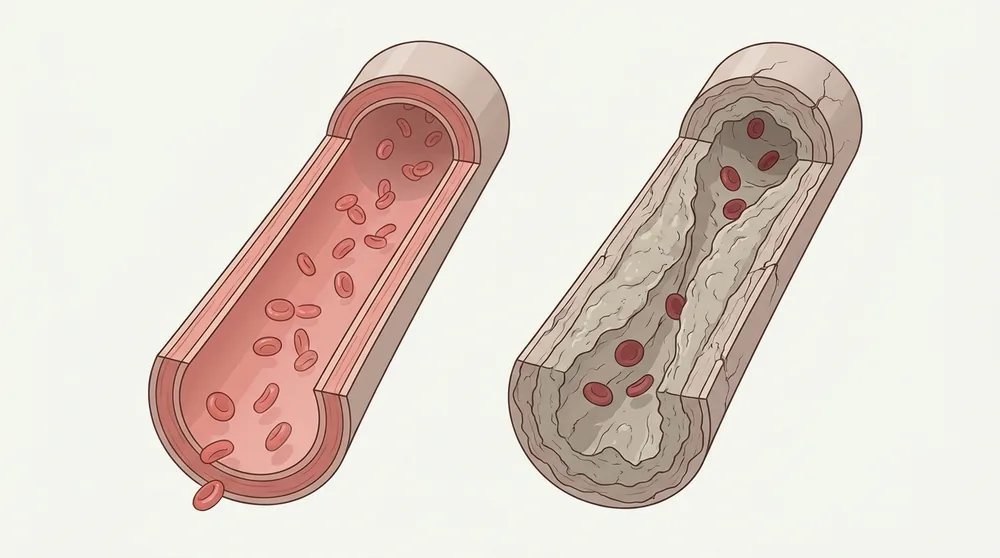
The logic is blunt: if the pipe cannot relax, no amount of squeezing the pump fixes the number. That, they argue, is why readings creep back the moment people stop treatment — the treatment was never touching the residue.
I would not write any of this until a doctor read it
I am not a physician and I was not going to publish thirty days of my own readings and pretend otherwise. So before a word went out, I sent everything — every reading, plus the full ingredient list — to Dr. Curtis Vaughn, an internal medicine physician who reviews health claims for this desk. He is paid for his time and nothing else, and has no relationship with the company.
 Marla:
Twenty-six points off my top number in thirty days. Is that real, or am I fooling myself?
Dr. Vaughn:The readings are real. Whether it is a real effect is a different question, and you should say so.
What makes me take it seriously is the shape of your curve. Placebo shows up immediately and then drifts back. Yours did almost nothing for a week, then moved steadily and held. That is harder to explain away.
Marla:And the “arterial cement” idea?
Dr. Vaughn:The branding is theirs. The underlying idea is not controversial. Arterial stiffness drives systolic pressure in older patients, and it is not what a standard prescription is aimed at. That is why so many of my patients need their dose raised over the years.
What worries me is not the label. It is somebody reading this, feeling good in week three, and quietly stopping a prescription on their own. Put that in bold if you have to.
Marla:Should I write the sequence out in the article?
Dr. Vaughn:You can try, but it will not land. Half of it is timing, and timing does not survive being written down — people skim, they reorder it, they take it with food when it should be without.
If someone wants to do this properly, send them to watch it done once. Ten seconds is short enough that seeing it a single time is genuinely enough.
My 30 days, week by week
Week 1
Almost nothing — exactly what Harold warned me about. What did change: I stopped waking up with that thick, heavy feeling in my head.
Week 2
First week the numbers moved past anything I could call noise. I started taking two readings a day because I did not trust the first.
Week 3
My husband noticed before I said a word: I walked the whole grocery run without stopping at the end of an aisle to catch my breath.
Week 4
It settled here and stayed. Twenty-six points off the top, sixteen off the bottom, no cough, no dizziness, and no 3 a.m. thudding.
Being straight with you: these are my numbers, from my cuff, in my kitchen. A sample of one, not a clinical trial. Results vary, and I am not promising you mine.
The part I could not put in writing
I tried to transcribe the sequence for you. I wrote it out three times and killed it three times, for the reason Dr. Vaughn gave: the order and the timing are the whole thing. Get them backwards and you are just swallowing something at 7 a.m. for no reason. Harold got it wrong his first four days and had to go back and watch again.
So here is the honest math on your morning. Reading this costs you a few minutes and changes nothing. Watching the sequence costs a few minutes more, and you can do it tomorrow at breakfast. The difference is thirty days from now, when your cuff either shows the same number it has shown for years, or it does not.
The demonstration is right below. It is free, there is nothing to sign up for, and the sequence is in the opening minutes — you do not have to sit through all of it to get what you came for.
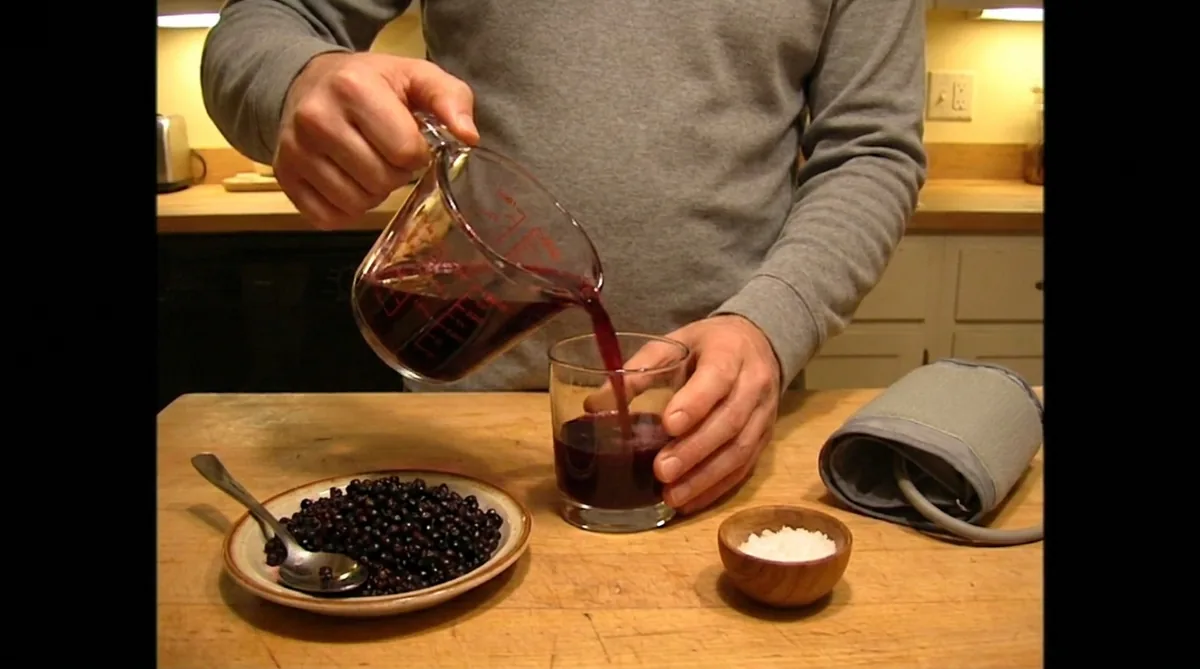
Click the player — the ten seconds are demonstrated on camera.
What worked for me
- Ten seconds. I never once forgot it.
- One capsule before breakfast, nothing to prepare.
- No cough, no dizziness, no swollen ankles.
- Nothing to cancel — there is no subscription.
Be honest with yourself
- Week 1 does almost nothing. Most people quit there.
- The order matters — you have to watch it once.
- The research is on the ingredients, not the blend.
- Never drop a prescription without your doctor.
Thirty days later I sleep through the night, and I take the stairs without the phone trick
I am still doing it every morning and nobody is paying me to. If you are where I was — awake at 3 a.m. listening to your own pulse — the only thing I would ask is that you watch it once before you decide.
Show Me The 10 Seconds ▶